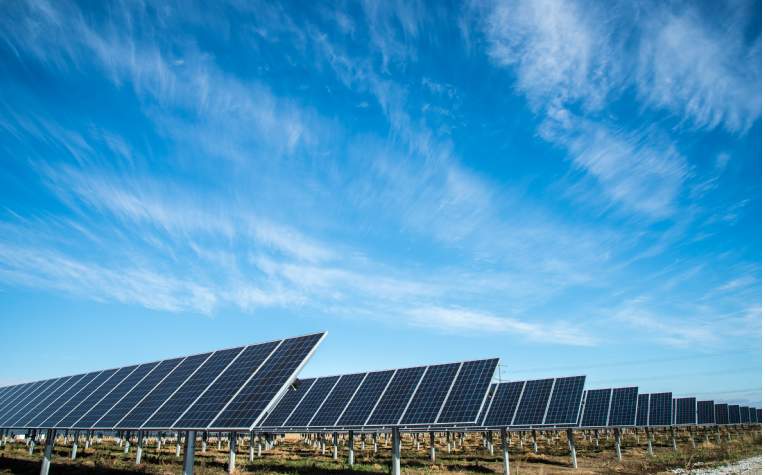
These commercial sites not only benefit from large under-utilised rooftops, but also from large above ground carparks adjacent to the premises.
The benefits
So why would commercial landlords and occupiers want to install a solar system?
- It directly reduces the operational costs of any commercial building, reducing bills and adding considerable price stability at uncertain times for energy prices.
- Ireland has also much higher export tariffs than its UK counterparts, about 4 times higher, so when the energy generated is not consumed on site, the grid pays for each unit that flows back into it.
- The energy consumption profile in a commercial buildings aligns very conveniently with the generation output of the panels, which means it’s much easier to optimise installations.
- Solar panels also have a lifespan of 25 to 30 years, while they typically achieve payback around four to seven years for a well-sized scheme with IRRs of 10-20%.
- Planning permissions are not typically needed on rooftops installations, with some exceptions around airports and heritage buildings.
- Solar systems have minimal running and maintenance costs, as they have no moving parts and require only occasional inspection and cleaning.
- Grant support is often available to reduce upfront capital costs, improving affordability and enhancing overall project returns. Furthermore, beyond government grants, a growing market of fully funded solutions has emerged, whereby third parties finance the upfront capital expenditure of solar installations in exchange for a long-term Power Purchase Agreement (PPA) with the off-taker. This structure enables deployment with zero upfront cost, delivering both greener energy and lower electricity prices to the end user.
Policy and futureproofing
Irish policy on the rollout of PV systems on buildings is rooted in the EU Energy Performance of Buildings Directive (EPBD). Under this framework, solar installation will be required on all new public and commercial buildings by 2027, and all new residential buildings by 2030. From 2028, solar will also be mandatory for existing non-residential buildings undergoing major renovation, where it is technically feasible.
This represents a significant step forward, ensuring that both new developments and refurbished buildings incorporate solar generation. However, it does leave a large portion of the existing building stock, many of which would be well suited to solar, outside the scope of these requirements.
That said, landlords and occupiers looking to proactively manage energy costs, reduce carbon emissions, and unlock value from their rooftops can access support from the Sustainable Energy Authority of Ireland (SEAI). SEAI offers a range of funding schemes to help offset upfront capital costs, with grants available of up to €162,600 for businesses and communities.
Conclusion
Ireland may not seem like an obvious solar market, but the fundamentals tell a different story. High energy prices, supportive policy, and strong returns make rooftop PV an increasingly compelling investment.
In a market where much of the existing building stock remains untapped, there is a clear opportunity for landlords and occupiers to act early; cutting costs, reducing carbon, and turning unused roof space into a valuable asset. In Ireland, solar is quickly becoming less of a sustainability choice and more of a smart financial move.
That said, successful deployment is not without its complexities. Constraints such as limited roof space, competing future plant requirements for broader decarbonisation (e.g. heat pumps), and the need to navigate private wire arrangements mean that a considered, technically informed approach is essential. These challenges underline the importance of experienced partners who can optimise system design, structure commercial arrangements, and ensure projects are future-proofed, unlocking maximum value while avoiding costly missteps.
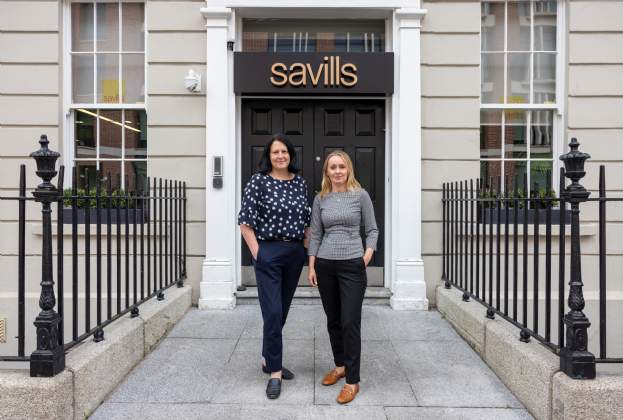
Luisa Mostarda is an Associate Director in Savills Ireland.